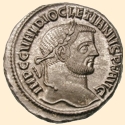
Family of Constantine and Licinius

From tetrarchy to dynasty

  • 317–324
  • 325–330
  • After 330

The notion of the tetrachy, with imperially appointed caesars in place of hereditary successors, put a lid on the common practice of Roman emperors honoring sons and other family members on their coinage. That practice changed during the truce between Constantine and Licinius following their first civil war in 316. Each ruler appointed his sons as caesar. Licinius had one son, Licinius II, who was 3 years old at the time. Constantine had two sons: Crispus, the eldest, was 14, and Constantine II was a new-born infant. Each ruler acknowledged the others' sons as caesar and the sons were soon appointed consuls and given other offices, despite their ages.

Neither eldest son was a product their fathers' official, imperial unions. Crispus was born before Constantine ever ascended to power, in 303. It is not clear whether Constantine was ever married to his mother, Minervina, who does not appear to be from a politically significant family. Licinius II was born to a concubine in 313. Constantine II (and Constantine's remaining children) were children of Fausta, the daughter of Maximianus, who Constantine married when he proclaimed himself augustus.

The celators at the mints had varying conventions for portraying small children. The first coin on this page has a wonderfully representative child-like portrait. This is the exception, though. Often the young caesar has a more or less teen-age portrait—connoted especially by a lack of beard—and other times, they simply reduce the size of the portrait.

104-532
Thumbnail image of coin

(click image to see larger picture)

Licinius II caesar
—struck by Constantine I
Arelate, 317
obv.- VAL LICINIUS NOB CAES;
rev.- IOVI CONSERVATOR; T ARL in ex
RIC VII Arl 128; Fail 278b
20mm; 3.9g; nummus

Wonderful portrait style for the youthful Licinius II, who was perhaps two or three years old when this coin was struck. This is not actually to be expected to be a realistic portrait of the young Licinius himself—who was living somewhere in the eastern empire at the time, and no one at the Arelate mint could have any idea what he looked like—but it is a wonderfully executed Late Antiquity portrait of a young child. Less talented celators of the era would convey the idea of "child" by simply making the portrait smaller.

104-550
Thumbnail image of coin

(click image to see larger picture)

Licinius II caesar
—struck by Constantine I
Siscia, 320
obv.- LICINIVS IVN NOB CAES; Licinius II, in consular robes, laureate bust left, holding a Victory that seems to be crowning him with laurels.
rev.- VIRTVS EXERCIT; Standard inscribed VOT X; two captives std; S|F, HL (ligature) in fields, Δ-SIS star-in-crescent in ex
RIC VII Sis 132; Fail 319.
20mm; 3.2g; AE3
204-386
Thumbnail image of coin

(click image to see larger picture)

Licinius II caesar
—struck by Constantine I
Aquileia, 317
obv.- LICINIVS IVN NOB CAES; Laureate, draped, cuirassed bust right
rev.- CONCORDIA AVGG NN; Consordia draped, standing left, holding caduceus & cornucopia
RIC VII Aq 12; Fail 273
19mm; 3.2g; nummus
This scarce type (rated R by Failmezger) was only struck in name of Licinius and his son, commemorating the new harmony between his family and Constantine's after their first civil war.
104-530
Thumbnail image of coin

(click image to see larger picture)

Licinius II caesar
—struck by Licinius I
Antioch, 317-320
obv.- DN VAL LICIN LICINIVS NOB C; Consular bust left holding mappa and globe
rev.- IOVI CONSERVATORI CAESS; Jupiter stg left holding Victory and sceptre, captive at feet; SMANT in ex, epsilon in field
RIC VII Ant 29
19mm; 3.1g; AE3
listed as R2 in RIC
204-275
Thumbnail image of coin

(click image to see larger picture)

Licinius II caesar
—struck by Licinius I
Heraclea, 318-320
obv.- DN VAL LICIN LICINIVS NOB C; Laureate draped bust left in imperial mantle holding scepter in left hand, mappa in right hand
rev.- PROVIDENTIAE CAESS; campgate with three turrets, five rows; • right, SMHΔ in ex.
RIC VII Her 31
20mm; 3.8g; nummus
204-276
Thumbnail image of coin

(click image to see larger picture)

Licinius II caesar
—struck by Licinius I
Alexandria, 321-324
obv.- DN VAL LICIN LICINIVS NOB C; Helmeted bust left, holding spear and shield
rev.- IOVI CONSERVATORI; Jupiter stg l; r hand holds Victory standing on globe, left holds scepter; eagle stands on ground at l holding wreath in beak; captive on ground at right; X IIM in field; SMALA in ex
RIC VII Ale 30
19mm; 3.3g; nummus

204-172
Thumbnail image of coin

(click image to see larger picture)

Crispus caesar
—struck by Constantine I
Treveri, 317
obv.- FL IVL CRISPVS NOB CAES; laureate draped cuirassed bust right
rev.- PRINCIPI IVVENTVTIS; Prince, laureate, in military dress, standing right, cloak spread, holding transverse spear in right hand, globe in left hand; T F in fields, •ATR in ex
RIC VII Tr 141
20mm; 3.1g; nummus
204-278
Thumbnail image of coin

(click image to see larger picture)

Crispus caesar
—struck by Constantine I
Treveri, 317
obv.- FL IVL CRISPVS NOB CAES; laur cuir draped bust right
rev.- CLARITAS REIPVBLICAE; Sol, radiate, standing facing, head left, chlamys across left shoulder, right hand raised, globe in left ; T|F in fields, •ATR in ex
RIC VII Tr 151
21mm; 2.9g; nummus
104-922
Thumbnail image of coin

(click image to see larger picture)

Crispus caesar
—struck by Constantine I
Treveri, 317
obv.- FL IVL CRISPVS NOB CAES; laur cuir draped bust right
rev.- CLARITAS REIPVBLICAE; Sol, radiate, standing facing, head left, chlamys across left shoulder, right hand raised, globe in left ; T|F in fields, •ATR in ex
RIC VII Tr 151; Fail 271
21mm; 2.1g; nummus
This type was only used for Crispus and Constantine II, and was struck to commemorate their appointment as caesars
204-331
Thumbnail image of coin

(click image to see larger picture)

Crispus caesar
—struck by Constantine I
Arelate, 317-320
obv.- CRISPVS NOB CAES; laureate cuirassed bust right (seen from rear)
rev.- PRINCIPIA IVVENTVTIS; Mars advancing right holding spear and shield, nude except for helmet and boots, chlamys flying; R S in fields; [QARL] in ex
RIC VII Arl 129
19mm; 3.4g; nummus
204-387
Thumbnail image of coin

(click image to see larger picture)

Crispus caesar
—struck by Constantine I
Aquileia, 317
obv.- CRISPVS NOB CAES; laureate draped cuirassed bust right
rev.- PRINCIPIA IVVENTVTIS; Prince, in military outfit, standing left, holding shield and sceptre; AQT in ex
RIC VII Aq 9
22mm; 3.3g; nummus
204-212
Thumbnail image of coin

(click image to see larger picture)

Constantine II caesar
—struck by Constantine I
Treveri, 323
obv.- CONSTANTINVS IVN NOB C; Laureate half-length bust right, dressed as the High Priest of Sol; scepter in right hand, globe in left surmounted by radiate Sol standing facing, nude but for chlamys over left shoulder, right hand raise.
rev.- BEATA TRANQVILLITAS; Globe set on altar inscribed VO / TIS / XX, three stars above; . STR crescent in exergue
RIC VII Tr 409 [var]
20mm; 3.2g; nummus

Virtually unknown bust type that is not listed in RIC. Footnotes on RIC VII, p.200, mention two examples of RIC 409 with a similar, Sol-on-globe bust type. This example is unmistakeably Sol.

However, Alten and Zschucke do discuss this bust type [18r] specifically in their “Die Römische münzserie Beata Tranquillitas” :

Note to bust 18r:
This bust is only for Constantine II. The Caesar is wearing the garb of the chief priest of the Sol-cult. This is not the usual consular mantle, which is laid in folds over the arm, but a robe with sleeves. This is clear from the hand holding the scepter which is quite visible standing out from the left sleeve.
This portrayal suggests that at this time, Constantine I transferred the office of High Priest of the Sol-cult for political reasons to his second son. The Augustus wanted to demonstrate with this gesture his religious neutrality and gain the good graces of the Christian population, a growing portion of his empire.

(my translation, from the original German text)
They catalog this as no. 143, with maybe a dozen examples known. The example pictured in their book is neither an obverse nor reverse die match, so evidently enough of these were minted to warrant at least two dies. This is the only bust type—out of nearly 100 different varieties—in which the ruler is shown dressed as High Priest.

204-360
Thumbnail image of coin

(click image to see larger picture)

Crispus caesar
—struck by Constantine I
Arelate, 321
obv.- CRISPVS NOB CAES; laureate bust right
rev.- CAESARVM NOSTRORVM; laurel wreath surrounding VOT • X ; T-crescent-*-A in ex
RIC VII Arl 234 [var]
19mm; 3.2g; nummus
The VOT X legend is not listed in RIC for this mintmark, only VOT V. However, this looks like it might just be a typo in RIC, where VOT V is recorded by mistake for numbers 244 & 245.
204-376
Thumbnail image of coin

(click image to see larger picture)

Constantine II caesar
—struck by Constantine I
Rome, 320
obv.- CONSTANTINVS IVN NOB C; lareate draped cuirassed bust right
rev.- ROMAE AETERNAE; Roma seated right, holding shield on her lap inscribed X V; R ερωC S in exergue
RIC VII Rom 200
18mm; 2.9g; nummus

rated as R4 in RIC. From Gert Boersema :

This is a coin with the famous eros mintmark in the exergue. To the left and to the right the letters R and [S] stand for officina [secunda] Romae ‘the [second] workshop of Rome’. The word eros is written in Greek, with the letters epsilon, rho and omega in a ligature. There was probably a pun intended: Eros translates into Latin as Amor, and Amor is an anagram for Roma. The wordplay Amor-Roma is known from the temple of Venus and Roma, which had these words written on the walls, and from a pun in Virgil’s Aenid.

cf. http://www.vcoins.com/ancient/gertboersema/store/viewItem.asp?idProduct=502

204-207
Thumbnail image of coin

(click image to see larger picture)

Constantine II caesar
—struck by Constantine I
Thessalonica, 324
obv.- CONSTANTINVS IVN NOB C; laureate draped cuirassed bust left
rev.- CAESARVM NOSTRORVM; VOT • V within wreath, TSBVI in exergue
RIC VII Thess 128
19mm; 3.0g; nummus

Coinage of Licinius and Licinius II ends after 324, when Constantine defeated Licinius for good at the Battle of Chrysopolis and became sole emperor. Crispus was by this time an adult with important responsibilities: not only was he in charge of Gaul, but he served as an admiral in Constantine's fleet and won a key naval battle that helped set the stage for the decisive Chrysopolis victory. After the defeat of Licinius, Constantine's third son, Constantius II (aged 7), was appointed caesar. Constantine's fourth son, Constans, was born in 323 and appointed caesar in 333.

After Chrysopolis, Constantine also issued coins commemorating his female relatives: Helena, his natural mother; Fausta, his wife; and, rarely, his sister Constantia (who was married to Licinius). Crispus was executed in 326—reportedly set-up by his step-mother, Fausta, in a bid to secure supremacy for her own three sons. Fausta was executed shortly thereafter.

204-128
Thumbnail image of coin

(click image to see larger picture)

Constantine II caesar
—struck by Constantine I
Trier, 324-325
obv.- CONSTANTINVS IVN NOB C; laureate, draped and cuirassed bust left
rev.- PROVIDENTIAE CAESS; Campgate with six rows, two turrets, no doors, star above, top and bottom rows empty blocks STR in exergue
RIC VII Tr 455
18mm; 2.8g; nummus
204-127
Thumbnail image of coin

(click image to see larger picture)

Constantius II caesar
—struck by Constantine I
Trier, 326
obv.- FL IVL CONSTANTIVS IVN NOB C; laureate, draped and cuirassed bust left
rev.- PROVIDENTIAE CAESS; 'camp gate' (more likely a city gate') with no doors and two towers, star above; STRŮ in ex
RIC VII Tr 480
19mm; 2.4g; nummus
204-222
Thumbnail image of coin

(click image to see larger picture)

Constantius II caesar
—struck by Constantine I
Ticinum, 324-325
obv.- FL IVL CONSTANTIVS NOB C; laureate draped cuirassed bust left
rev.- PROVIDENTIAE CAESS; campgate (6 layers) plus base and decorated pediment; two ornate turrets, star above; in ex.: Q-crescent-T
RIC VII Tic 201
19mm; 2.5g; nummus
204-169
Thumbnail image of coin

(click image to see larger picture)

Constantine II caesar
—struck by Constantine I
Sirmium, 324-325
obv.- CONSTANTINVS IVN NOB C; Laureate draped cuirassed bust right
rev.- ALAMANNIA DEVICTA; Victory right, holding trophy and palm, foot on captive below; •SIRM• in ex
RIC VII Sirm 51
19mm; 2.9g; nummus
Struck to commemorate the victories won over by the Germans on the Rhine frontier by Constantine's sons, complementing the SARMAT DEVICTA type struck for Constantine, celebrating his victory over the Sarmatians. Struck only at Sirmium.
204-375
Thumbnail image of coin

(click image to see larger picture)

Constantius II caesar
—struck by Constantine I
Antioch, 324-325
obv.- [none]; laureate draped cuirassed bust left
rev.- CONSTANTIVS CAESAR; * above legend; SMANTA • in ex
RIC VII Ant 60
18mm; 2.4g; nummus
rated R3 in RIC
204-223
Thumbnail image of coin

(click image to see larger picture)

Constantine II caesar
—struck by Constantine I
Antioch, 324-325
obv.- [none]; laureated head facing right - no legend
rev.- CONSTANTINVS CAESAR; SMANTS in ex
RIC VII Ant 54
mm; g; nummus
104-730
Thumbnail image of coin

(click image to see larger picture)

Helena augusta
—struck by Constantine I
Treveri, 325
obv.- FL HELENA AVGVSTA; Helena facing right
rev.- SECVRITAS REIPVBLICE; Helena standing left, holding branch; ST[R] in ex
RIC VII Tr 458
19mm; 3.0g; nummus
There is almost no trace of the expected "R" in the mintmark, but is explained by the very poor strike in the immediate area. Not only that, but if the intended mintmark was ST from Ticinum, it is embarassingly off-center; whereas STR would be perfectly centered.
204-265
Thumbnail image of coin

(click image to see larger picture)

Fausta augusta
—struck by Constantine I
Rome, 326
obv.- FLAV MAX FAVSTA AVG; bust right with wavy hair, draped and jeweled
rev.- SPES REIPVBLICAE; Fausta holding a pair of her children; R-wreath-P in ex
RIC VII Rom 292
20mm; 3.0g; nummus
Rated R4 in RIC. Not common from Rome mint.
104-800
Thumbnail image of coin

(click image to see larger picture)

Fausta augusta
—struck by Constantine I
Heraclea, 325
obv.- FLAV MAX FAVSTA AVG; draped bust rt
rev.- SPES REIPVBLICAE; Fausta holding a pair of her children
RIC VII Her 80; Fail 360
20mm; 3.3g; nummus
204-293
Thumbnail image of coin

(click image to see larger picture)

Fausta augusta
—struck by Constantine I
Treveri, 324-325
obv.- FLAV MAX FAVSTA AVG; bust right with wavy hair, draped and jeweled
rev.- SPES REIPVBLICAE; Fausta holding a pair of her children; PTR in ex
RIC VII Tr 460
19mm; 2.6g; nummus

The founding of Constantinople in 330 led to new series of coins struck in the names of all his relatives, promoting the dynastic reach of his family. Late in his reign Constantine expanded this further when he promoted two male nephews. Delmatius was appointed caesar in the Balkans—perhaps to bring the number up to four and evoke the tetrarchy—while Hannibalianus was appointed King of Armenia, in a political gesture intended to provoke the Parthian empire. Both struck coins in the names of theiir respective offices.

When Constantine died in 337, the empire was divided among his three surviving sons. They quickly eliminated Delmatius and Hannibalianus, then turned on each other. Constantine II was next, in 340. Constans lasted until 350 as augustus in the west, while Constantius II reigned until 361. In addition to coins honoring their deceased and now deified father, the sons also struck a new series of coins honoring Helena, as mother of Constantine. Helena by now was an active and prominent Christian who would later be canonized by the Church. The empire at this time was rapidly became more Christianized, so Helena was undoubtedly a very popular matronly figure. Especially since their own mother, Fausta, was disgraced, tortured, and executed in 326 by Constantine himself.

Constans also struck coins honoring Theodora, Constantine's step-mother and second wife of Constantius I. This was somewhat curious as she had been dead for 30 years and was not even the sons' grandmother. It appears, though, that the coins were only struck in Treveri, in Gaul, which had been Constantius' capital, so perhaps she was still remembered well there and Constans thought it useful to evoke her name to bolster his own.

204-122
Thumbnail image of coin

(click image to see larger picture)

Helena augusta
—struck by Constantine I
Constantinople, 330
obv.- FL IVL HELENAE AVG; Bust with ornamental mantle and necklace; hair elaborately dressed.
rev.- PAX PVBLICA; Pax stg. l. holding branch and transverse sceptre; in ex, CONSε
RIC VIII Cons 34
16mm; 1.6g; nummus
104-226
Thumbnail image of coin

(click image to see larger picture)

Constantine II caesar
—struck by Constantius II
Antioch, 335 AD
obv.- CONSTANTINVS IVN NOB C; laureate cuirassed bust right
rev.- GLORIA EXERCITVS; two soldiers standing facing each other, each holding spear and leaning on shield; two standards standing between; SMANΘ in ex
RIC VII Ant 87
18mm; 2.2g; AE3
104-534
Thumbnail image of coin

(click image to see larger picture)

Constans caesar
—struck by Constantine I
Siscia, 337
obv.- FL CONSTANTIS BEA C; Laureate, draped and cuirassed bust of Constans facing right
rev.- GLORIA EXERCITVS; Two soldiers standing facing, each holding a spear in their outer hand and holding one standard between them, BSIS* in exergue, christogram atop standard
RIC VII Sis 264; Fail 372
17mm; 1.72g; AE3
This obverse legend from Siscia only. Rated R4.
104-405
Thumbnail image of coin

(click image to see larger picture)

Constantius II augustus
—struck by Constantius II
Constantinople, 337–361
obv.- DN CONSTANTIVS P F AVG; draped diademed emperor bust left, holding globe
rev.- FEL TEMP REPARATIO; emperor walking left with two captives before, holding chi-rho banner; CONSθ* in ex
22mm; 3.3g; AE2 (centenionalis)
104-906
Thumbnail image of coin

(click image to see larger picture)

Theodora augusta
—struck by Constantine II
Treveri, 337-340
obv.- FL MAX THEODORAE AVG; diademed draped bust right
rev.- PIETAS ROMANA; Pietas standing holding child in arms
RIC VIII Tr 91; Fail 385
16mm; 1.9g; AE4
104-455
Thumbnail image of coin

(click image to see larger picture)

Delmatius caesar
—struck by Constantine I
Siscia, 335-337 AD
obv.- FL DELMATIVS NOB C; laureate, draped and cuirassed bust l
rev.- GLORIA EXERCITVS; BSIS in ex; two soldiers stg. facing each other holding spear and shield; in between, standard
RIC VII Sis 256; Fail 372
17mm; 1.5g; Bronze
204-254
Thumbnail image of coin

(click image to see larger picture)

Hannibalianus caesar
—struck by Constantine I
Constantinople, 336-337
obv.- FL HANNIBALLIANO REGI; Bareheaded, draped and cuirassed of Hanniballianus bust right
rev.- SECVRITAS PVBLICA; The river-god Euphrates reclining right, urn at his side and reed in background, holding scepter; CONSS in ex
RIC VII Cons 148
17mm; 1.4g; nummus

What's New Heading

Paragraph content

Do You Love Ancients?
Curious to Know More?
ACM logo
The ACM!

Learn About the Hobby,
Join Our Free Email List!